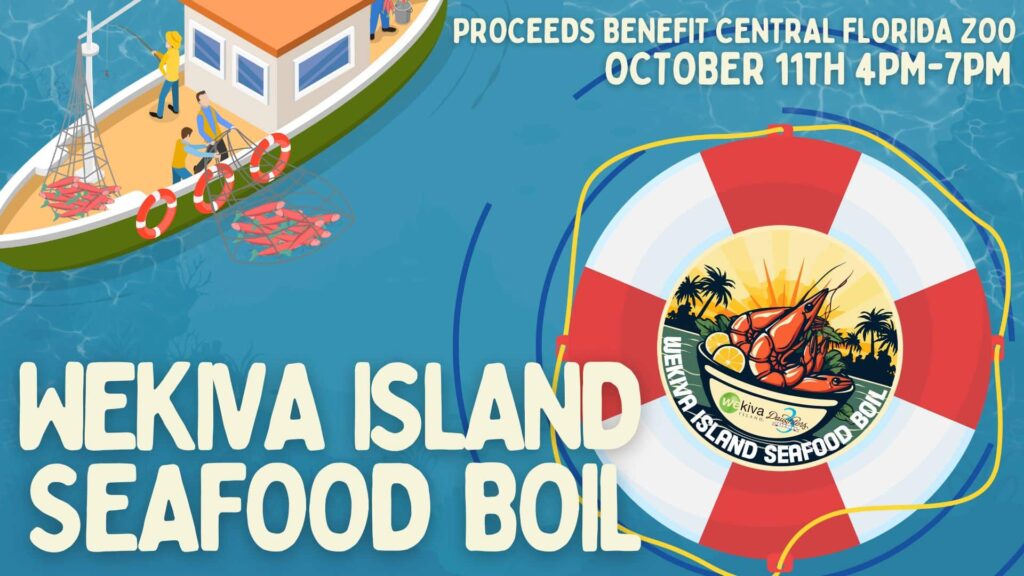
This Saturday, Wekiva Island will be closed until 5:00 p.m. for our annual Fall Egg Fest. We’d love for you to join the fun—grab your ticket and be part of the festivities. After 5:00 p.m., the Island will reopen and welcome guests as usual.

Orlando’s best-kept secret isn’t a theme park; it’s a clear, 72-degree river system fed by ancient aquifers just 20 minutes north of the city. Florida holds the largest concentration of freshwater springs on Earth, with some of the most ecologically significant systems in the Western Hemisphere within 90 minutes of Orlando.
This ranking cuts through the options using honest criteria: water conditions, accessibility, crowds, rentals, and distance, to match you with the right spring.
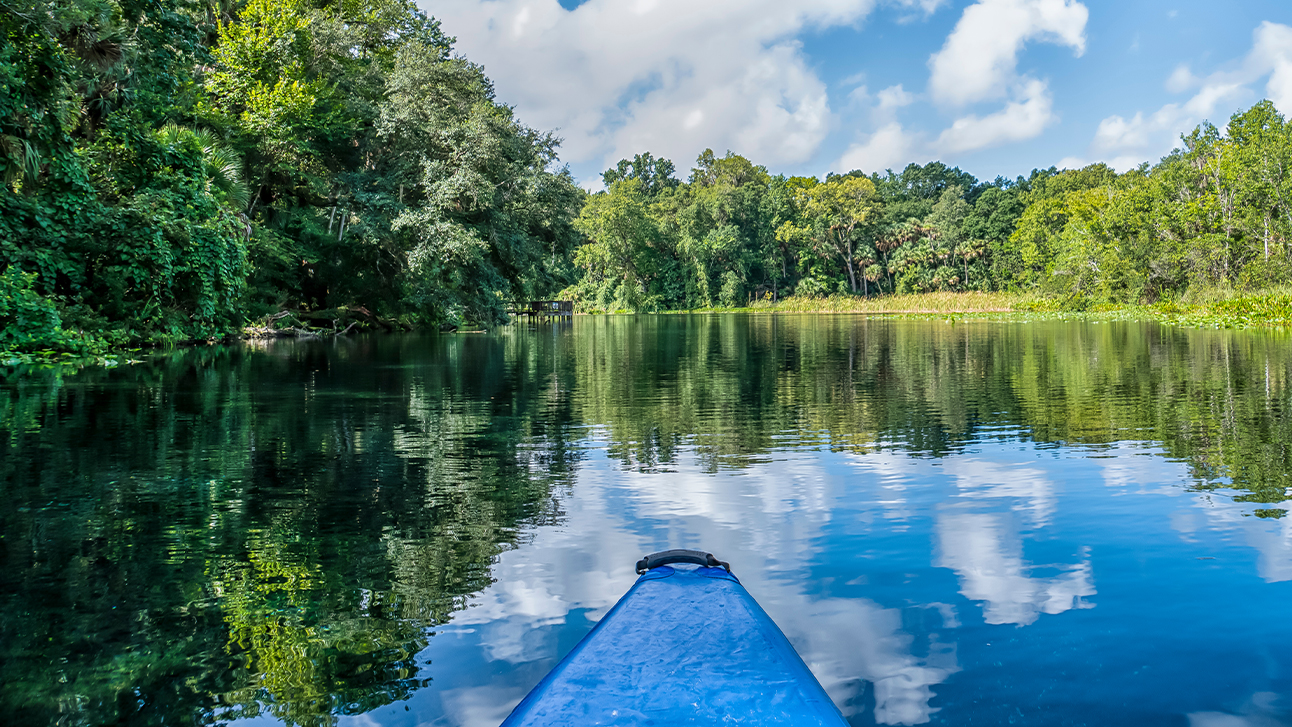
Florida’s springs are the result of millions of years of geology. Rainwater filters down through sandy soil and porous limestone into the Floridan Aquifer, one of the world’s most productive, before finding a crack and bubbling back up. That underground journey, sometimes decades long, is why spring water arrives so clean and flows so reliably year-round.
According to the Florida Department of Environmental Protection, Florida is home to more than 1,000 springs, representing what may be the largest concentration of freshwater springs on Earth. The springs of Central Florida alone produce billions of gallons of fresh water every single day — a natural resource that keeps these swimming holes, paddle runs, and wildlife corridors accessible in every season, whether it’s the height of summer or the middle of winter.
Year-round accessibility makes the Orlando-area springs work for every type of visitor. Beginners get calm, shallow swimming with full infrastructure: rentals, food, restrooms, and lifeguards at select locations. Intermediate paddlers find spring runs long enough to challenge without remote logistics. Advanced adventurers have cave systems, multi-day wilderness trails, and technical canoe runs through old-growth forest. The same aquifer serves all of them.
The experience-level framework also helps with crowd management. Some springs fill to capacity before 10 a.m. on summer weekends. Others require reservations. A few have no amenities at all. Knowing where each spring falls on that spectrum matters just as much as knowing what the water looks like.
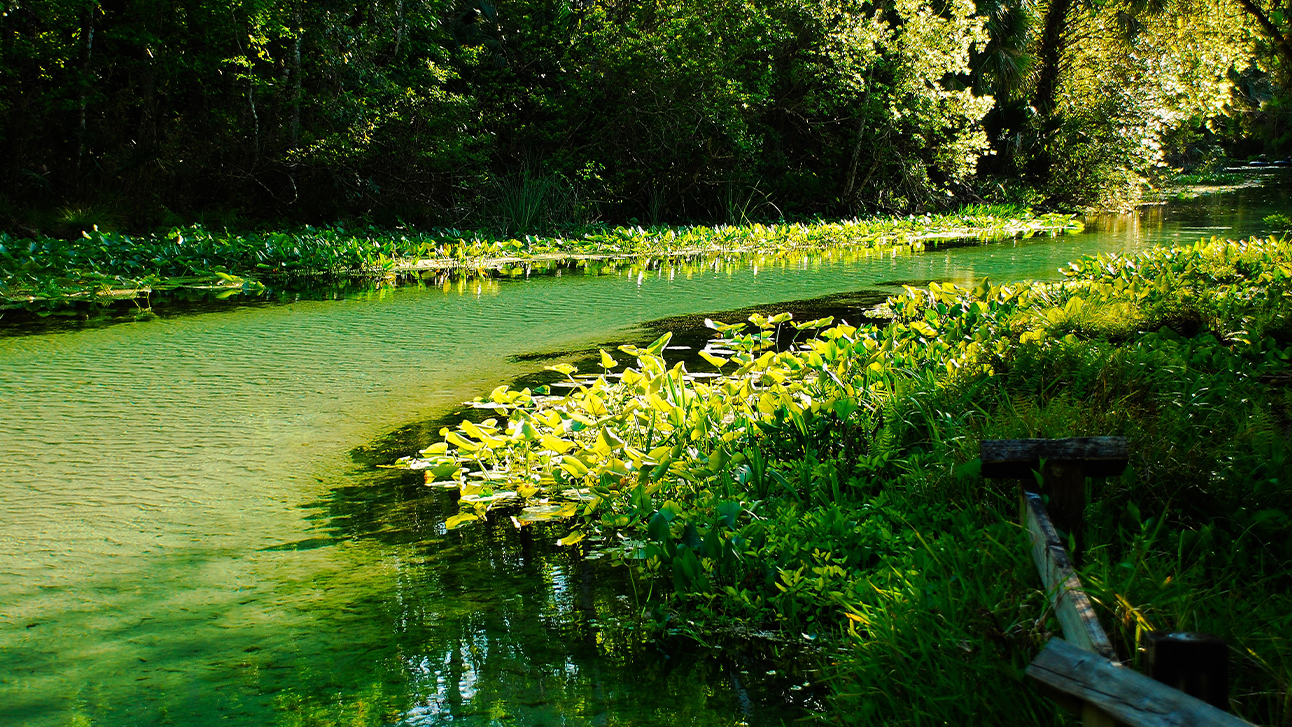
The springs below were evaluated across five criteria, applied consistently to produce a ranking that’s actually useful for trip planning.
Water conditions and depth: Shallow, calm swimming areas with defined entry points score better for beginners. Open-water paddling, deeper spring vents, and current-assisted canoe runs indicate intermediate or advanced terrain.
Accessibility and infrastructure: On-site parking, restrooms, food, equipment rentals, and staffed entry points make a spring more accessible regardless of experience. Springs with no facilities or requiring portage over uneven terrain rate as intermediate or advanced.
Distance from Orlando: Driving time from downtown Orlando is noted for each spring. Closer proximity allows for spontaneous day trips; longer drives demand more planning and commitment.
Available activities by skill level: A spring that offers only a floating tube run is beginner-appropriate. One with a 7-mile technical canoe run, open-water scuba diving, and backcountry camping is not.
Crowd management and reservation requirements: Some springs require advance reservations that can fill weeks out during peak season. Others close once their vehicle limit is reached. Both factors affect real-world accessibility.

Wekiva Island is a privately operated outdoor destination on the Wekiva River offering kayak, canoe, and paddleboard rentals, cabana rentals, food at Without a Paddle Cafe, drinks at The Tooting Otter, and a full events calendar featuring live music, seasonal festivals, and educational programming. It’s also the ideal launch point for one of the best beginner paddles in Central Florida — a one-mile trip upstream to Wekiwa Springs State Park.
Wekiwa Springs State Park has been drawing visitors since 1870, when a bathhouse and hotel opened on the site. The spring pool is kidney-shaped, roughly 200 feet long and 100 feet wide, with an average swimming depth of 4 feet — clear enough to see the limestone floor and calm enough for non-swimmers to wade in without anxiety. Wekiwa Springs holds a designated Outstanding Florida Spring classification under Florida’s Springs and Aquifer Protection Act, a designation reserved for the state’s 30 most ecologically significant spring systems. Note that the state park requires an advance reservation; Wekiva Island does not.
Together, the two destinations form the most complete beginner experience on this list. First-timers can rent a kayak at Wekiva Island, paddle a protected Wild and Scenic River past otters, herons, alligators, and turtles, swim at a designated Outstanding Florida Spring, and return to cold drinks and food waiting at the end. The state park’s 25+ miles of trails give non-swimmers a full day of activity on their own.
Kelly Park is a unique spring featuring a natural lazy river. Visitors can bring or rent tubes to float for 30–45 minutes down a quarter-mile of clear spring run, enjoying ferns, cypress, and wildlife along the way. The run ends at a swimming area with a small sandy beach, perfect for families.
Rock Springs is also classified as a designated Outstanding Florida Spring by the Florida Department of Environmental Protection. Its spring run flows 8.6 miles before joining the Wekiva River — the same river that runs past Wekiva Island — creating a connected ecosystem that links both of the top beginner springs on this list.
Kelly Park fills fast. According to the Orange County Parks FAQ, the park hits capacity by mid-morning on summer days, with visitors lining up as early as 4:30 a.m. No online reservations exist; it’s first-come, first-served with a hard daily cap. Arrive at or before the 8 a.m. opening on weekdays, or visit during shoulder season (October through February) when wait times drop significantly.
There are no rentals inside the park. Paddlers should connect with Kings Landing just outside, or plan a full river experience downstream through Wekiva Island.
Blue Spring operates in two completely different modes depending on the season, and understanding that distinction is essential before planning a visit.
From mid-November through March, the spring run at Blue Spring State Park is closed to all water activities. The reason is one of Florida’s most extraordinary wildlife events. As St. Johns River temperatures drop below 68°F, West Indian manatees migrate in to warm up.A record 932 manatees were counted in a single day in January 2024, making Blue Spring the highest-density manatee refuge in the world. Visitors observe from a half-mile elevated boardwalk, with water clear enough to see manatees in full detail from above.
From late spring through early fall, the spring run reopens for swimming, snorkeling, scuba diving, and tubing. The park offers kayak rentals and guided tours through Blue Spring Adventures.
Blue Spring is beginner-appropriate in summer for its clear water, family-friendly infrastructure, and easy boardwalk access. It’s beginner-appropriate for the manatee-viewing experience in winter, which requires no swimming ability. Just be aware that the park frequently reaches capacity and temporarily closes on peak days; the same early-arrival principle that applies to Kelly Park applies here, too.
DeLeon Springs blends natural beauty with history. The spring feeds a swimming area near the Ponce de León inlet, with hiking, paddling, and wildlife observation throughout the park. The water is cold and clear enough for snorkeling, but deeper and faster than beginner springs, placing it in the intermediate tier.
The park’s most famous feature has nothing to do with water. The Old Sugar Mill Restaurant, housed in a replica of an 1830s sugar mill, lets visitors cook their own pancakes on cast-iron griddles built into each table. It is, objectively, one of the more unusual dining experiences in Central Florida, and it has developed a loyal following that books tables weeks out on weekends. Plan accordingly if you want both the spring and the breakfast.
Paddling connects to Lake Woodruff National Wildlife Refuge, where wood storks, sandhill cranes, and migratory waterfowl are common sightings. For intermediate visitors wanting water time, a half-day hike, and a meal, DeLeon Springs is the most complete day-trip destination on the list.
Alexander Springs Recreation Area in Ocala National Forest is home to one of Florida’s 27 first-magnitude springs, a USGS classification for springs discharging over 64.6 million gallons per day. It is the only location in the Ocala National Forest where open-water scuba diving is permitted, and its gently sloping sandy beach makes it one of the more accessible first-magnitude springs in the state for swimmers and snorkelers.
The intermediate rating comes down to two factors: open water requires comfort with variable depth and current, and the drive into Ocala National Forest puts visitors far from urban support. On-site rentals connect to a paddling trail leading to Lake George, and camping is available, making it a strong overnight option for combining swimming, paddling, and a night in one of Florida’s most intact forests.
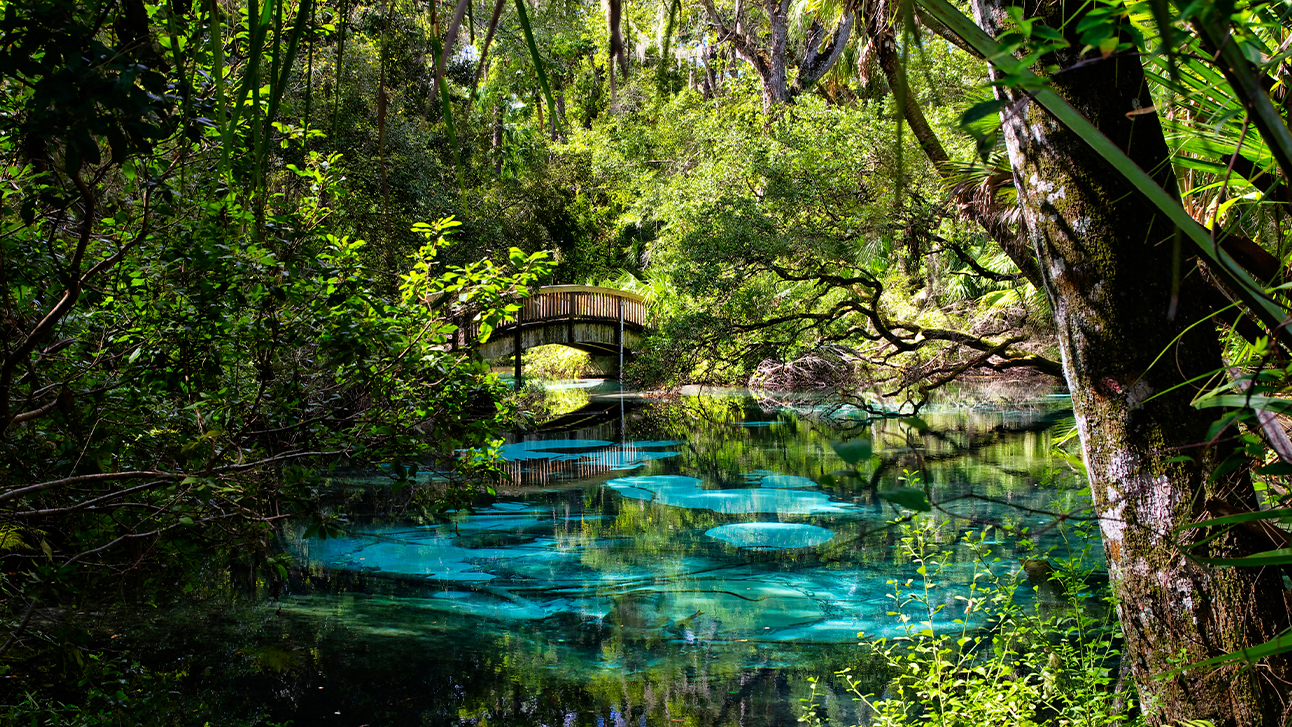
Juniper Springs Recreation Area in Ocala National Forest was constructed in the 1930s by the Civilian Conservation Corps and is recognized by the U.S. Forest Service as one of the oldest and best-known recreation areas on the East Coast. The historic CCC-built millhouse, originally powered by an undershot waterwheel that generated electricity for the entire campground before the grid arrived, now serves as an interpretive center. The 7-mile Juniper Run is considered one of the most technically challenging and scenically beautiful canoe and kayak routes in the state of Florida.
Juniper Run is a narrow, winding waterway under a closed canopy with no safe exit points and a one-way current, making capsizing difficult to recover from. It’s not suitable for first-time paddlers or anyone uncomfortable with a moving river and no bailout options.
The spring basin is a highlight: a concrete-walled pool roughly 135 by 80 feet with hundreds of bubbling vents and openings visible through water up to 16 feet deep, excellent for swimming and snorkeling. Surrounded by dense subtropical forest and Florida’s unique Big Scrub ecosystem, Juniper Springs feels worlds away from the theme parks.
This entry requires context. Rock Springs Run appears twice in this guide. First, as the beginner-friendly tube run at Kelly Park, and again here as a full-day wilderness paddling route. They share the same river but deliver completely different experiences.
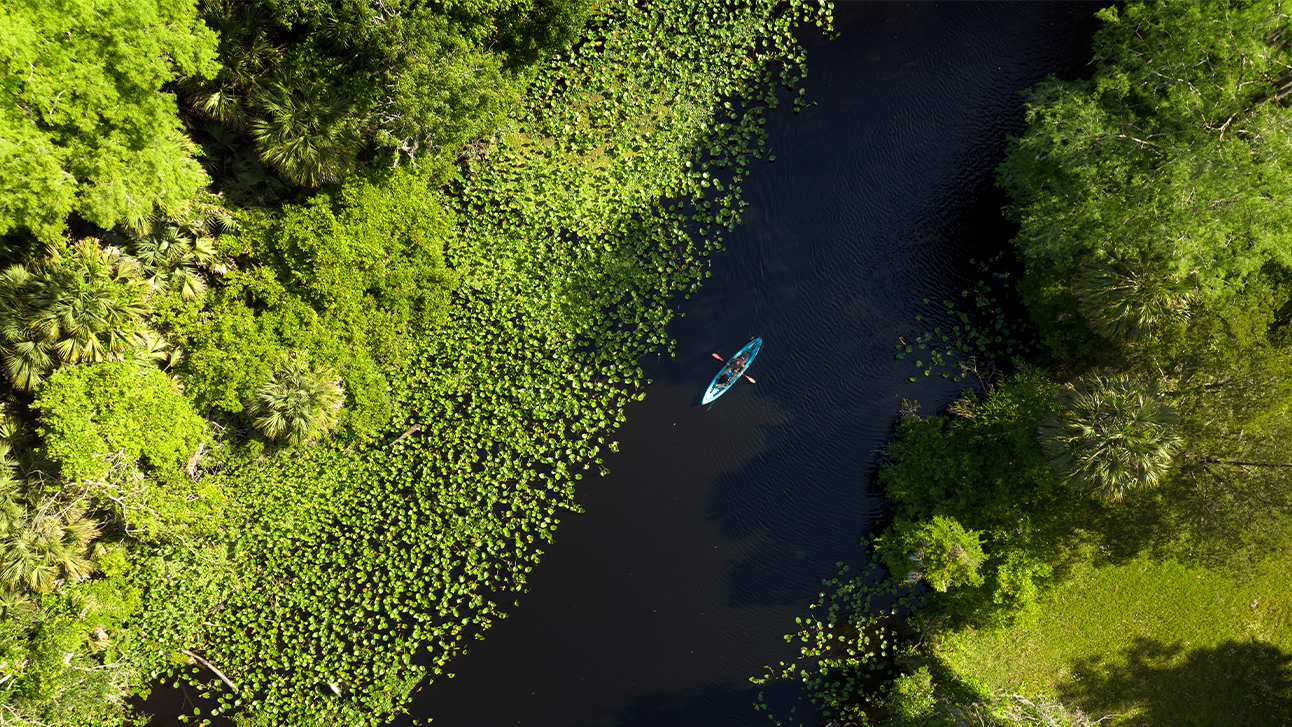
The Rock Springs Run paddling trail, spanning 8.5 miles from Kings Landing to the Wekiva River/Wekiva Island, is a pristine Central Florida route. It runs through Rock Springs Run State Reserve, a protected corridor known for sightings of Florida black bears, river otters, and various birds. The water is consistently clear, with the run narrowing under a forest canopy in the upper sections before opening near the Wekiva River.
This 8.5-mile run is advanced due to logistics and time. The 3–4 hour paddle requires shuttle coordination back to the start, as there are no facilities along the route. Paddlers must manage the moderate current, navigate downed trees, watch for summer afternoon thunderstorms, and carefully monitor their energy and time.
Kings Landing offers kayak and canoe rentals with shuttle service for the upper portion of the run. Wekiva Island at the downstream end provides the ideal conclusion to the journey, with food, drinks, and cabanas available for paddlers finishing out the route. For experienced paddlers looking for a full Florida wilderness day, the Rock Springs Run trail ending at Wekiva Island is one of the most rewarding route options within an hour of downtown Orlando.
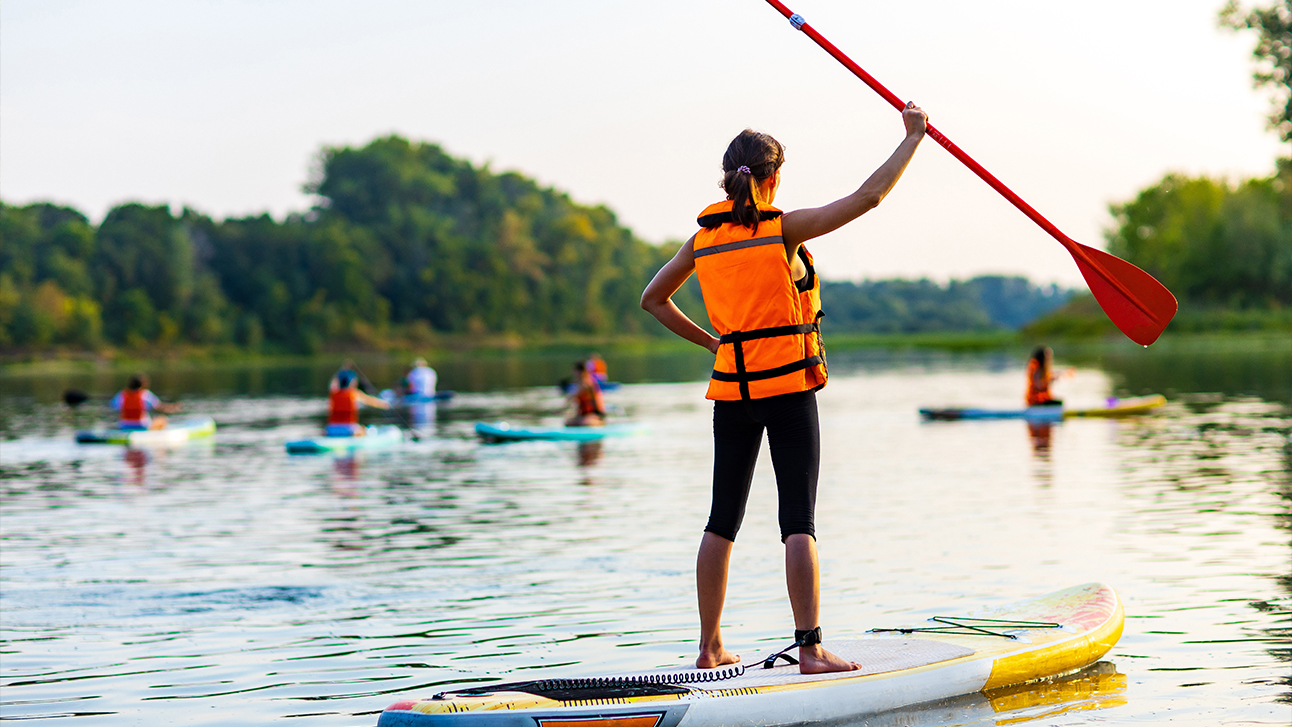
The necessary gear for Florida springs depends on the location and your activity level.
Essential (All Visitors): Reef-safe sunscreen, polarized sunglasses, reusable water bottle, water shoes with grip, dry bag for valuables, and bug spray for dawn and dusk near water.
Intermediate Visitors: A snorkel mask is worth it for the water clarity and underwater life. A waterproof phone case or action camera captures the view well.
Advanced Paddlers: Paddling gloves, a waterproof trail map, and a larger dry bag for food, spare clothes, and emergency supplies. Coordinate shuttle logistics before launching.
Wekiva Island’s water rental program includes paddles and life vests with every kayak and canoe rental, one of the practical advantages of launching from a venue designed around beginner and intermediate accessibility.
Florida’s springs are technically open year-round. In practice, the experience varies significantly by season, and matching season to experience level improves the odds of a great visit considerably.
Summer: All springs open, cool water contrasting sharply with 95°F heat. Wekiwa Springs hits its 213-vehicle capacity on weekends; Kelly Park fills within an hour. Advanced paddlers should start Juniper Run early to beat afternoon thunderstorms.
Fall: The best shoulder season. Crowds drop after Labor Day, wildlife activity picks up, and cabana reservations at Wekiva Island are easier to secure. Ideal for intermediate and advanced visits that would feel crowded in summer.
Winter: Blue Spring’s manatee season peaks from December through February. At Wekiva Island and Wekiwa Springs, paddling is quiet and often spectacular, with river otters active and low foliage opening up wildlife sightings. Water temperature stays constant year-round, so swimming is always viable for those willing to acclimate.
Spring: Wildflower season on hiking trails, strong paddling conditions before summer heat. Spring break rivals summer crowds at popular springs, so time arrivals early on weekends.
What is the best spring near Orlando for beginners?
Wekiva Island, a privately operated outdoor destination on the Wekiva River, offers rentals, food, and amenities — and sits just one mile downstream from Wekiwa Springs State Park, one of the best beginner-friendly springs near Orlando. The spring pool is shallow at four feet deep, making it an easy, low-stakes swim. Kelly Park / Rock Springs, featuring a natural tube run, is a close second for low-effort water fun with young families.
How much does it cost to visit springs near Orlando?
Entrance fees are generally low. Wekiwa Springs, Blue Spring, DeLeon Springs, and Alexander Springs all charge around $6 per vehicle or person (Alexander Springs). Kelly Park is $3–$5 per vehicle. Juniper Springs is the highest at $12/person. Wekiva Island charges a $5 entry fee during busy season (May-August) and special events. Rentals and food/drinks are priced separately.
Do I need to make reservations for Orlando springs?
Wekiwa Springs State Park now requires advance day-use reservations as of September 2025. Wekiva Island does NOT take reservations for water rentals (they’re first-come, first-served), but cabana rentals can be reserved in advance. All other springs on this list operate on a first-come, first-served basis for day use, though several, including Kelly Park and Blue Spring, can reach capacity and temporarily close on peak summer days. The recommendation for all busy-season visits is to arrive at or before opening time (typically 8 a.m.) regardless of reservation requirements.
Are the springs near Orlando open year-round?
All listed springs are open year-round, except for Blue Spring State Park’s spring run. It closes from mid-November to mid-March for manatee protection, though the park remains open for boardwalk viewing—the best time to see the manatees. All other springs maintain year-round swimming and paddling access.
What is the water temperature at Orlando springs?
Most Orlando-area springs are consistently 72°F year-round and are fed by the Floridan Aquifer. Rock Springs/Kelly Park is slightly cooler at 68°F. Since the temperature is aquifer-fed, it doesn’t fluctuate with seasons. This provides a refreshing contrast to hot summers and remains comfortable for swimming even in winter, relative to the surrounding environment.
Can I bring my own kayak to Orlando springs?
Yes, most springs allow visitors to launch personal kayaks, canoes, and paddleboards. Wekiwa Springs State Park has a designated launch area inside the park. Wekiva Island allows guests to launch personal watercraft from their facility. Kelly Park has a primitive launch at the adjacent Camp Joy site. Juniper Springs charges $10 per personal watercraft in addition to the entry fee. Call ahead to confirm the current policy at any specific location before arriving with personal equipment.
Are dogs allowed at springs near Orlando?
Wekiva Island prohibits dogs on property, unless they’re registered service animals. Policies vary. Dogs are generally not permitted in spring swimming areas at Florida State Parks, including Wekiwa Springs State Park and Blue Spring State Park. Kelly Park also prohibits pets on park grounds. Generally, spring swimming areas are not appropriate environments for dogs, regardless of park rules, given wildlife, water quality concerns, and the presence of alligators.
Are there alligators at Orlando springs?
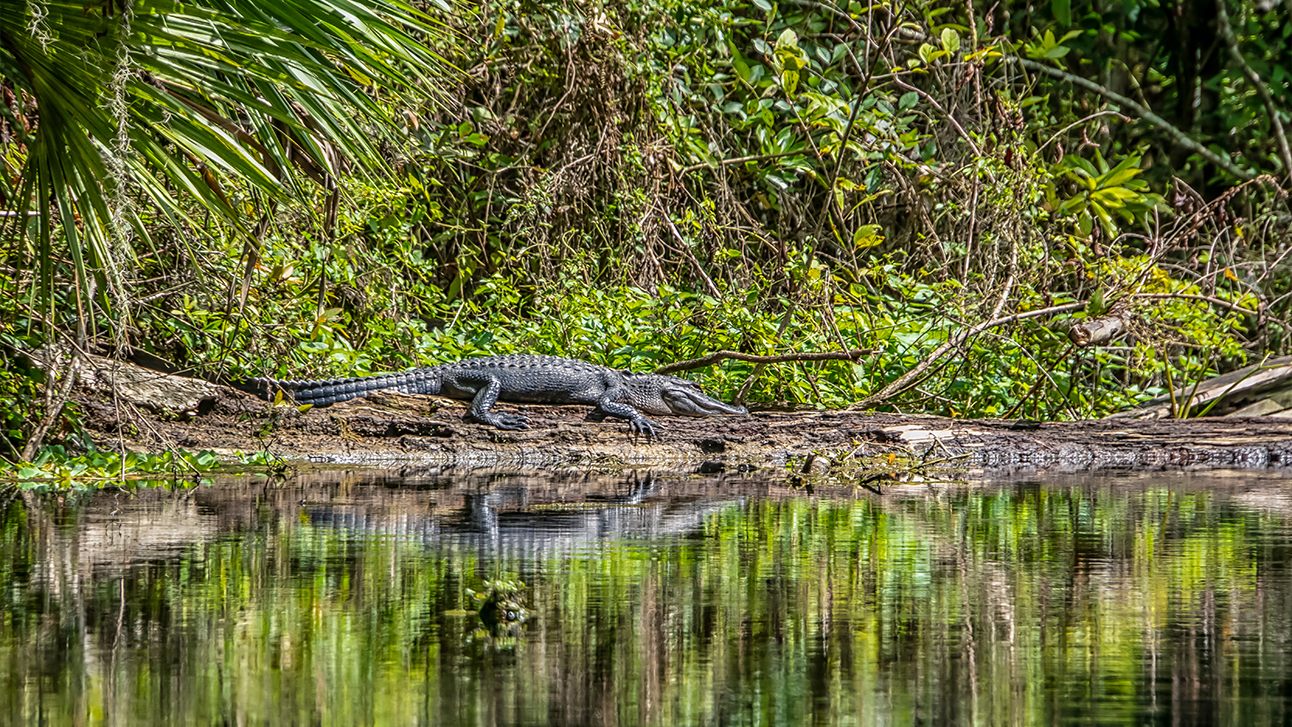
Alligators are native to Florida’s freshwater systems, including the Wekiva and St. Johns Rivers and Ocala National Forest waterways. They are generally found away from active swimming areas and are more commonly sighted from kayaks. Remember standard wildlife awareness: do not feed them, maintain distance, and keep pets away from the water.
Can I drink alcohol at Florida springs?
Policies vary by location. Wekiva Island, as a private venue, operates a licensed on-site bar, The Tooting Otter. Florida State Park rules generally restrict alcohol consumption, though exact enforcement varies. Always check specific park rules before bringing alcohol to a spring.
Which spring near Orlando is least crowded?
For the Wekiva area, visit Wekiwa Springs on weekday mornings, especially in the fall shoulder season, for the least crowded access.
Alexander Springs, about an hour north in Ocala National Forest, is consistently less crowded than springs closer to Orlando, as the drive deters casual day-trippers. DeLeon Springs is also typically quieter on weekdays than the Wekiva River system springs.
Central Florida’s underrated springs north of Orlando have drawn visitors for over 150 years, pre-dating theme parks. Within an hour of the city, these aquifer-fed rivers offer exceptional options, from a child’s first kayak trip or swim in cold, clear water to a full day of wilderness paddling.
For the easiest starting point, Wekiva Island provides the most complete beginner-to-intermediate experience in the region, with rentals, food, and access to one of Florida’s most protected river systems all in one place. Check our water rentals page and visit the event calendar to plan around something special.